
Buying glass wine bottles in Belgium: the complete guide for winemakers and bottlers
Choosing a bottle looks like an aesthetic decision. In practice, it has direct consequences for your bottling line, your logistics costs and the way your wine evolves in the glass. This guide brings together what Belgian and Dutch winemakers need to ground their choice technically: from bottle type and closure to seasonal planning and realistic order quantities.
Which type of wine bottle suits your wine? A technical comparison by bottle type
Choosing a wine bottle does not start with aesthetics. It starts with the wine itself, with your bottling line, with your customer and with the logistics you have to organise in between. Anyone who reverses that order pays the difference later — in returns, in quality complaints or in an image that does not match what is inside the bottle.
Glass wine bottles come in dozens of standard and specialty shapes, but in practice most winemakers and bottlers narrow their choice down to four main types: Bordeaux, Burgundy, Rhine/Alsace and the shoulderless bottle for sparkling wines. Each type has its own silhouette, its own weight and its own role on the shelves of large-scale distribution or in the cellar of a craft estate.
The Bordeaux bottle has straight shoulders and is the most universal choice for red wines with tannic structure and for powerful white wines. Its shoulder holds back the sediment when the bottle is poured. The Burgundy bottle has a wider body with sloping shoulders and traditionally suits pinot noir, chardonnay and other varieties in which elegance and roundness take centre stage. The Rhine bottle is slim and tall, ideal for aromatic white wines such as riesling or gewürztraminer, and it stacks compactly on a pallet.
But these typologies are a starting point, not an endpoint. What really counts on the bottling line are the technical parameters: the height and diameter (compatible with your line's guides?), the mouth size (BVS, ROPP, cork?), the weight (impact on transport and CO₂ footprint) and the colour of the glass (flint, half-white, antique green, dead leaf, antique brown). For sparkling wines such as crémant or prosecco, the wall thickness is not a detail but a safety parameter — the bottle must withstand the internal pressure.
A comparison on paper is useful. A sample run on your own line is better. Most packaging specialists who take this craft seriously send samples before confirming an order.
The main bottle types at a glance
- Bordeaux bottle: straight shoulders, universal choice for red and powerful white wines, with sediment retention.
- Burgundy bottle: wide body with sloping shoulders, suited to pinot noir and chardonnay.
- Rhine/Alsace bottle: slim profile, compact on pallet, for aromatic white wines.
- Champagne/Crémant bottle: reinforced wall for overpressure, with a specific mouth size for the muselet.
- Rosé bottle: variants in Provence style (low shoulder) or Bordeaux variant, with a strong visual profile.
- Technical parameters to always verify: mouth size, weight (g), height (mm), diameter (mm) and glass colour.
|
Bottle type |
Typical volume |
Mouth size |
Recommended closure |
Typical use |
|
Bordeaux |
750 ml |
18.5 mm / BVS |
Cork, screw cap (ROPP) |
Red & powerful white wines |
|
Burgundy |
750 ml |
18.5 mm |
Cork, screw cork |
Pinot noir, chardonnay, Burgundian styles |
|
Rhine / Alsace |
750 ml |
18.5 mm |
Cork, screw cap |
Riesling, gewürztraminer, aromatic whites |
|
Champagne / Crémant |
750 ml |
29 mm (muselet) |
Champagne cork + muselet |
Sparkling wines, crémant |
|
Rosé Provence |
750 ml |
18.5 mm / BVS |
Screw cap, cork |
Rosé, light summer wines |
Overview of the five most common wine bottle types and their technical characteristics.
The bottle is the first packaging your customer sees and the last that protects your wine. You must never reverse that order.
➜ Request a sample set of the bottle types that match your wine style — before you order, test on your own line.
Closures, weight and sustainability: what really counts on the bottling line?
What bottlers only notice when it is too late: the closure was not the right choice for that specific bottle on that specific line. A cork that sits too tight damages the rim of the mouth. A screw cap that does not have sufficient torque leaks in distribution. And a bottle that is 30 grams heavier per unit than the reference adds up across thousands of pallets per season.
The closure is not an accessory to the bottle. It is a technical system. Corks require a BVS or standard mouth size, a specific insertion depth and a capsule that correctly covers the bottle rim. Screw caps (ROPP) require a different mouth geometry and a different liner specification depending on the desired oxygen level in the bottle — which directly affects the evolution of the wine. For sparkling wines, the muselet fastening is a safety component, not decoration.
Weight plays a different role today than it once did. For a long time, heavy glass was considered a quality signal in the market. That still holds for premium positioning with the end consumer. But for large distribution volumes, for e-commerce and for export markets, lightweight glass is increasingly the more rational choice — lower transport costs, lower CO₂ emissions, less breakage on mechanical bottling lines.
European PPWR legislation (Packaging and Packaging Waste Regulation) puts additional pressure on the choice of materials. Reuse, recycled glass content and labelling requirements are no longer future scenarios — they are already part of the purchasing decision for large buyers and retailers. Anyone buying glass wine bottles today for a new brand or a new line is well advised to factor that compliance into the selection criteria from the start.
Gaasch Packaging works with several glass suppliers and advises independently based on your technical and positioning requirements. That means advice is not tied to a single product range, but to what best suits your product and your market.
Points of attention per closure type
- Cork requires a BVS or standard mouth size, correct insertion depth and a compatible capsule.
- Screw cap (ROPP) has a different mouth geometry; the liner specification determines oxygen uptake in the bottle.
- Muselet + champagne cork is a safety component for sparkling wines — non-negotiable.
- Lightweight glass is the rational choice for volume, e-commerce and export markets.
- Premium heavy glass remains relevant for positioning in hospitality and the gift segment.
- PPWR compliance: recycled glass content and reuse requirements weigh in on the purchasing decision.
|
Closure type |
Mouth size required |
Application |
Point of attention |
|
Natural cork |
18.5 mm standard |
Premium red & white wine |
Risk of TCA (cork taint) in lower quality grades |
|
Technical cork (agglomerated) |
18.5 mm standard |
Everyday wine, volume |
Uniform sealing, lower TCA risk |
|
ROPP screw cap |
BVS or ROPP mouth size |
White wine, rosé, everyday wines |
Liner choice determines oxygen permeability |
|
Champagne cork + muselet |
29 mm |
Sparkling wines, crémant |
Verify the bottle's overpressure resistance |
|
Glass stopper / T-cork |
Variable |
Port, fortified, premium spirit style |
Decorative function + resealable |
The five most common closure types and their specific technical requirements.
The closure helps determine how your wine evolves after bottling. That is a technical decision, not an aesthetic one.
➜ Hesitating between cork and screw cap for your new line? Request a technical consultation — without sales pressure.
Seasonal calendar for winemakers: from harvest to bespoke delivery
The wine calendar is not a calendar you choose. It is imposed by nature and by the market. Harvest in September and October, bottling in the following spring or autumn, peak deliveries just before the holidays — that cycle is familiar to every winemaker. But for packaging suppliers, that cycle is a test. Anyone not prepared for it delivers too late or with the wrong stock.
For large distribution companies that buy in bulk, planning is relatively straightforward: large volumes, longer lead times, fixed suppliers. The challenge lies in price certainty over longer periods and in the guarantee that the bottles are compliant on arrival.
For winemakers with their own bottling line, timing is more critical. October and November are the peak months for bottling the new harvest. That means the bottle order is ideally placed in August or September — sometimes earlier for specific or limited references. A flexible supplier who holds stock based on your forecast gives you the certainty that your line will not stand still.
For small winemakers working with a mobile bottling line, the story is different. The mobile line comes when it comes — April, May, June are typical periods. Just-in-time delivery is then no luxury but a necessity. Ordering too early means storage costs and risk of damage. Ordering too late means waiting while the line is scheduled.
A good packaging supplier knows those three profiles and adapts its delivery model accordingly. That requires more than putting a catalogue online. It requires a relationship, a forecast built together and a warehouse close enough to deliver quickly. Gaasch Packaging delivers from its own warehouse capacity in Belgium with its own fleet — and works with returning wine customers on a seasonal delivery schedule aligned with their bottling plan.
The wine calendar at a glance
- August–September: ideal moment for your bottle order based on the harvest volume forecast.
- October–November: peak bottling of the new harvest — delivery capacity is then limited if you order late.
- December: holiday peak for large-scale distribution, with delivery times under pressure.
- April–June: mobile bottling lines are active, JIT delivery is essential.
- Summer: quiet period, ideal for stock build-up and testing new references.
|
Winemaker profile |
Typical bottling period |
Recommended order timing |
Delivery model |
|
Large distribution / bulk |
Continuous or quarterly |
On forecast, 6–12 weeks ahead |
Volume contract, fixed delivery frequency |
|
Winemaker with own line |
October–November (new harvest) |
August–September |
Stock on forecast, staggered delivery |
|
Small winemaker mobile line |
April–June |
6–8 weeks before scheduled date |
JIT delivery, small MOQ, flexible planning |
The three typical winemaker profiles and their corresponding ordering and delivery rhythm.
A mobile bottling line waiting for bottles is a cost you could have avoided. Planning starts with your supplier, not in your own warehouse.
➜ Share your bottling schedule with us — we will work out a delivery plan that fits your seasonal cycle.
Flexible MOQ and own stock: ordering wine bottles without a minimum that shuts you out
Minimum order quantities are, for many small and mid-sized winemakers, the first hurdle that keeps them away from the right supplier. Large glass manufacturers work with pallet loads or even full truckloads as standard MOQ. That makes sense for their production model — but it does not fit an estate that bottles 5,000 bottles per year or a new brand that wants to test with a first run of 500 units.
The consequence is that small winemakers often end up with sub-optimal solutions: the wrong bottle because it happened to be available in smaller quantities, or a wholesaler that charges a high price for a small batch. Both situations cost money — and sometimes image as well.
A distributor that works with its own stock and flexible MOQs changes that situation. Stock on site means you do not wait for a production run at the manufacturer. Flexible MOQs mean you can order what you need for this harvest, without building up overstock that costs you money.
Gaasch Packaging works with MOQs tailored to the reality of Belgian and Dutch winemakers and bottlers — from small estates to larger bottling companies. For standard references, delivery is possible per 50 or 100 units for test runs, scaling up to pallet deliveries as soon as the choice is final. For personalised bottles (with print, sleeve or specific glass colour), different minimums apply depending on the decoration technique.
In addition, an integrated approach with a single point of contact offers the benefit that bottle, closure, capsule and any decoration are handled in one order. That saves coordination time and reduces the risk of incompatibility between components. Anyone who has ever had to reject a batch of capsules because they did not fit the chosen bottle knows how valuable that is.
Whether you bottle 500 or 500,000 bottles per year: the right packaging partner adapts its model to your volume, not the other way around.
What a flexible ordering policy means in practice
- Flexible MOQ for standard references: feasible per small unit for tests and first runs.
- Stock on site: no waiting time for a production run at the manufacturer.
- Scaling possible from test order to pallet delivery within the same product range.
- Integrated order: bottle + closure + capsule + decoration via a single point of contact.
- Personalisation with different MOQ, depending on the decoration technique (sleeve, print, engraving).
- A single SPOC (Single Point of Contact) for the complete packaging order — less coordination effort.
|
Order scale |
Typical profile |
MOQ orientation |
Point of attention |
|
Test order / first run |
New brand, first harvest |
Small quantities possible via distributor stock |
Decoration has a higher MOQ than the plain bottle |
|
Seasonal order |
Small estate, mobile line |
Aligned with harvest volume, flexible |
JIT delivery requires early reservation |
|
Pallet order |
Mid-sized estate, own line |
Standard pallet fill per reference |
Volume discount possible with forecast agreement |
|
Volume contract |
Large distribution / bottler |
Truckloads, quarterly deliveries |
Price certainty via annual contract |
Four order scales, each with its own MOQ logic and points of attention.
The right bottle in the right quantity, at the right moment — that is not a demanding expectation. That is simply what a good packaging supplier does.
➜ Tell us your expected volume for this season — we will calculate the most efficient order quantity without leaving you with overstock.
Ready to order?
Ready to order your wine bottles or to discuss your delivery schedule? Contact Gaasch Packaging for a tailored quote — adapted to your volume, your season and your packaging requirements.
Frequently asked questions
1. Which glass wine bottle is most suitable for a red wine with high tannins?
The Bordeaux bottle is the classic choice for red wines with a firm tannic structure. The straight shoulder acts as a natural filter that holds back sediment when pouring. For the mouth size, you choose based on your closure: cork requires a standard 18.5 mm opening, while a BVS mouth size is used for specific screw caps or technical closures.
2. What is a realistic lead time for glass wine bottles if I have my own line running in October?
For bottling in October or November, it is recommended to place your bottle order in August — preferably earlier if it concerns specific or less common references. Standard references that your distributor holds in stock are often delivered faster, but during peak periods even that buffer is limited. A delivery schedule based on your forecast offers the most certainty.
3. Can I buy glass wine bottles in Belgium without having to take a full pallet?
Yes, this is possible via a packaging distributor that works with its own stock and flexible MOQs. Glass manufacturers work with minimum orders that are too large for small producers. A distributor like Gaasch Packaging buffers that threshold by keeping stock on site and being able to deliver smaller quantities — especially for test runs or first runs of a new brand.
4. Which closure should I choose if my wine is intended for retail rather than hospitality?
For retail — and certainly for everyday wines, white wines or rosés — the screw cap (ROPP) is a rational choice. The consumer appreciates the ease of use, and for the producer it offers consistent sealing without TCA risk. The liner specification of the cap determines oxygen uptake in the bottle after sealing — that is a technical detail that influences the long-term evolution of your wine. Always ask your supplier for the technical data sheet of the liner.
5. How does Gaasch Packaging work for winemakers using a mobile bottling line?
Gaasch Packaging delivers from its own warehouse capacity in Belgium and works with its own fleet, which makes Just-in-Time delivery possible for winemakers depending on a mobile bottling line. For this profile — typically active between April and June — the order is ideally placed 6 to 8 weeks before the scheduled bottling day. A single point of contact coordinates bottle, closure and capsule in one order, ensuring compatibility and timely arrival at your site.
6. Are glass wine bottles with PCR glass available and how do they differ from standard glass?
Glass wine bottles with a high proportion of PCR (Post-Consumer Recycled glass) are available and are gaining importance in light of the PPWR regulation. The main difference with standard glass lies in the sustainability claim and the lighter CO₂ footprint per bottle. Visually, PCR glass can have a slightly different appearance (especially in clear bottles), which sometimes becomes an aesthetic choice. Discuss with your supplier in advance which recycling percentages are possible for your chosen reference and which certification accompanies it.
7. Can I have wine bottles printed or personalised for my estate or brand?
Yes, personalisation of glass wine bottles is possible through various techniques depending on your budget, run size and desired look. Direct printing on glass (ceramic inks, fired into the glass) gives a premium result without a label. Sleeving offers a cost-efficient solution for larger runs with full-colour possibilities. Engraving and glass spray are suitable for exclusive or limited-edition productions. For smaller winemakers, labelling on a personalised bottle is often the most achievable combination. Discuss your desired run size and timing early in the process — decoration techniques have their own lead times that will affect your planning calendar.
8. How do I choose the right weight for my wine bottle — light or heavy?
The weight of a wine bottle has both a functional and a perceptual dimension. A heavier bottle conveys quality and premium positioning — this is why many top wines are bottled in bottles of 600 grams or more. At the same time, a lighter bottle means less transport weight, lower CO₂ emissions and lower logistics costs. For winemakers committed to sustainability, a lighter bottle offers demonstrable advantages. The choice depends on your positioning, the type of wine, the distribution channels and the expectations of your target audience. There is no universally correct answer — weigh your brand values against your operational and ecological goals.
9. What makes Gaasch Packaging different as a supplier of glass wine bottles for small and mid-sized winemakers?
Gaasch Packaging combines an extensive range from multiple glass suppliers with its own warehouse capacity in Belgium and its own delivery fleet. That means independent advice rather than a sales pitch for a single brand, flexible MOQs that do not exclude based on volume, and a Single Point of Contact for bottle, closure, capsule and decoration. For winemakers who take their bottling plan seriously, that translates into less coordination effort and fewer unpleasant surprises between order and bottling day.
10. As a winemaker with a small harvest volume, can I still rely on reliable and fast delivery of wine bottles?
A small harvest volume does not mean you have to settle for long lead times or high minimum quantities. With a consignment stock formula, you reserve bottles based on your harvest forecast and call them off when your filling schedule requires it — without having to take a full batch at once. This is particularly valuable for winemakers in Belgium and Luxembourg working with limited storage capacity or variable harvest volumes. A good supplier thinks along with you in your planning cycle and proposes a delivery schedule that aligns with your bottling line, so that you never have bottles in your warehouse too early or too late.
- Vanessa De Winne
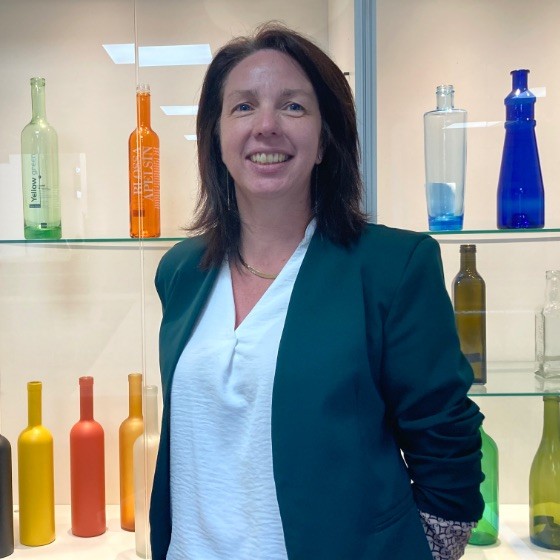
Account Manager bij GAASCH PACKAGING
Would you like to learn more about compliant, reliable and circular packaging solutions that align with your sustainability goals? Let's discuss your project.